Providing Greater Certainty in Mole Evaluation

Orlucent® has developed the first handheld fluorescent molecular imaging system to non-invasively evaluate early tissue remodeling that signals the likelihood of a mole’s transition to melanoma.

Orlucent advanced skin cancer detection and molecular imaging technology
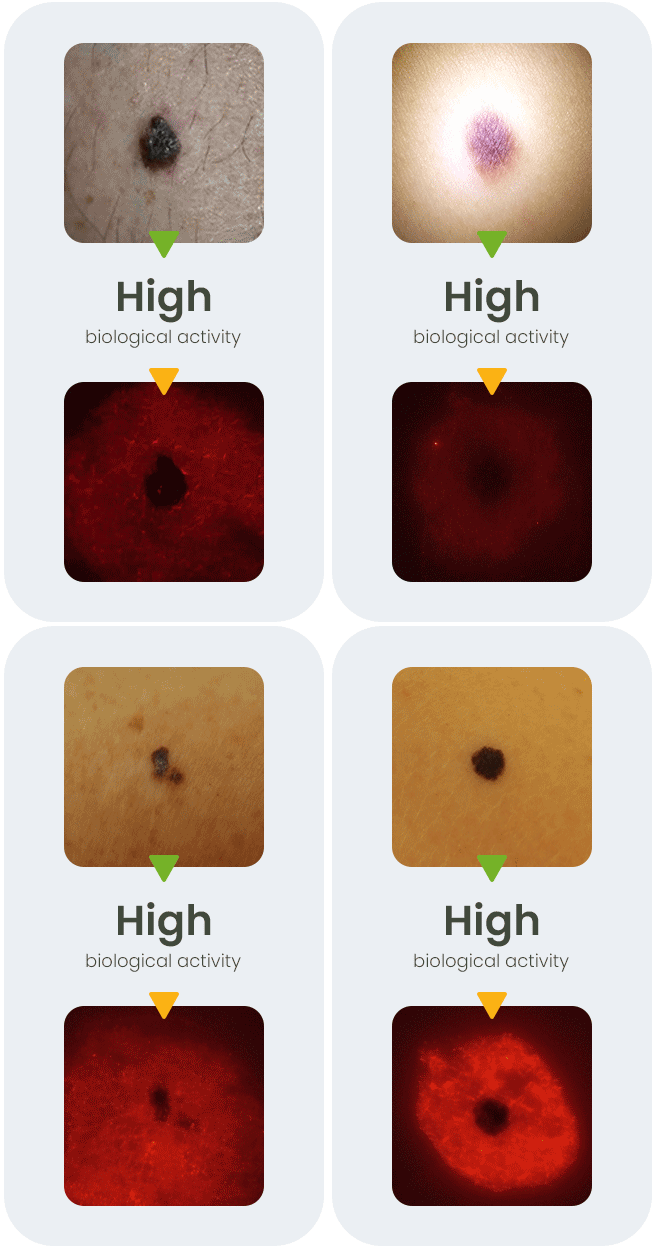
Skin lesion comparison showing high biological activity detected by Orlucent fluorescent molecular imaging vs white light
Orlucent handheld medical imager for point of care melanoma test

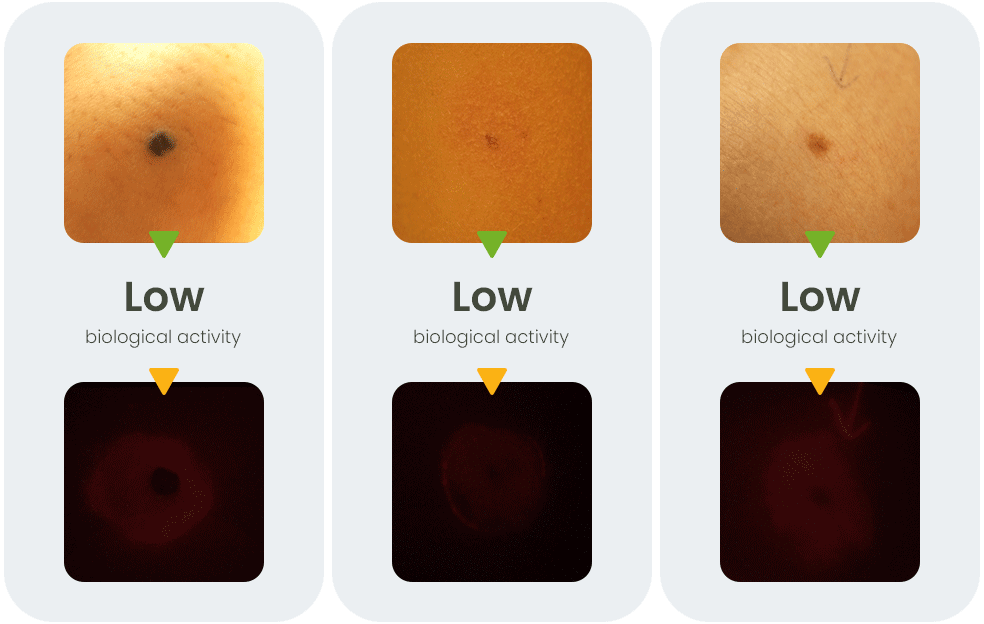
Higher Fluorescence Indicates Tissue Remodeling With Higher Probability to Develop Into Malignancy

Orlucent advanced skin cancer detection and molecular imaging technology
Dermatological assessment showing high biological activity in a skin lesion detected by Orlucent molecular imaging

Orlucent Accomplishments

Reveals Suspicious Tissue Remodeling Invisible to the Naked Eye

The Orlucent System evaluates biological activity originating from within the mole

The Product

The Orlucent System non-invasively determines the likelihood of malignant activity for suspicious moles to provide greater certainty in clinical assessments of indeterminate pigmented lesions.

Three Simple Steps

Fluorescent biotag is topically applied then wiped away

Fluorescent biotag is topically applied then wiped away

Clinician performing a point of care melanoma test using the Orlucent handheld imager on a patient

Handheld imager captures white light and fluorescent images

The software provides a probability score for tissue remodeling.

The software provides a probability score for tissue remodeling

Orlucent Technology

The novel Orlucent System detects a biomarker for neoangiogensis and stromal tissue remodeling associated with early melanoma development.

How Does it Work?

Orlucent advanced skin cancer detection and molecular imaging technology

Fluorescent Biotag
Binds to Receptors

Macro view of a suspicious skin lesion for initial clinical dermatological assessment

Imager Captures
Fluorescence

Orlucent advanced skin cancer detection and molecular imaging technology

Software Reports the Presence of a Malignancy Biomarker

Current Mole Evaluation Methods are Visual and Subjective

Current mole evaluation relies heavily on visual assessment, an inherently subjective process dependent on clinician experience and interpretation. This visual and subjective approach is unfortunately not always sufficient to reliably distinguish atypical moles with malignant potential.2-4 Consequently, to overcome the limitations of this subjective visual judgment, biopsy is often used to gain more objective histopathological information. However, biopsy results are not immediate, may also be subject to interpretation, and carry some risk of infection and scarring.

The Orlucent System is Biologically Based and Objective

Addressing physicians’ desire for improved mole evaluation tools 5-7, the Orlucent System was developed to increase accuracy in the identification of moles with the potential to become malignant. Orlucent is the first system to measure the presence of the avb3 integrin – a biological indicator for stromal tissue remodeling. By indicating the presence of tissue remodeling activity without invasive biopsy, the Orlucent System allows physicians to readily differentiate indeterminate pigmented lesions with malignant activity from those of less concern.

Clinician performing a point of care melanoma test using the Orlucent handheld imager on a patient